Each year we mail and email the Massachusetts Consumer Information Bulletins for pest control, termite control, lawn care and plant health care to all our active customers.
If you did not receive one, or would like another copy, please follow this link to the Pesticide Consumer Information Bulletin web page.
Sean Greenhow
Greenhow, Inc
Showing posts with label integrated pest management. Show all posts
Showing posts with label integrated pest management. Show all posts
Friday, January 27, 2017

Tuesday, February 22, 2011
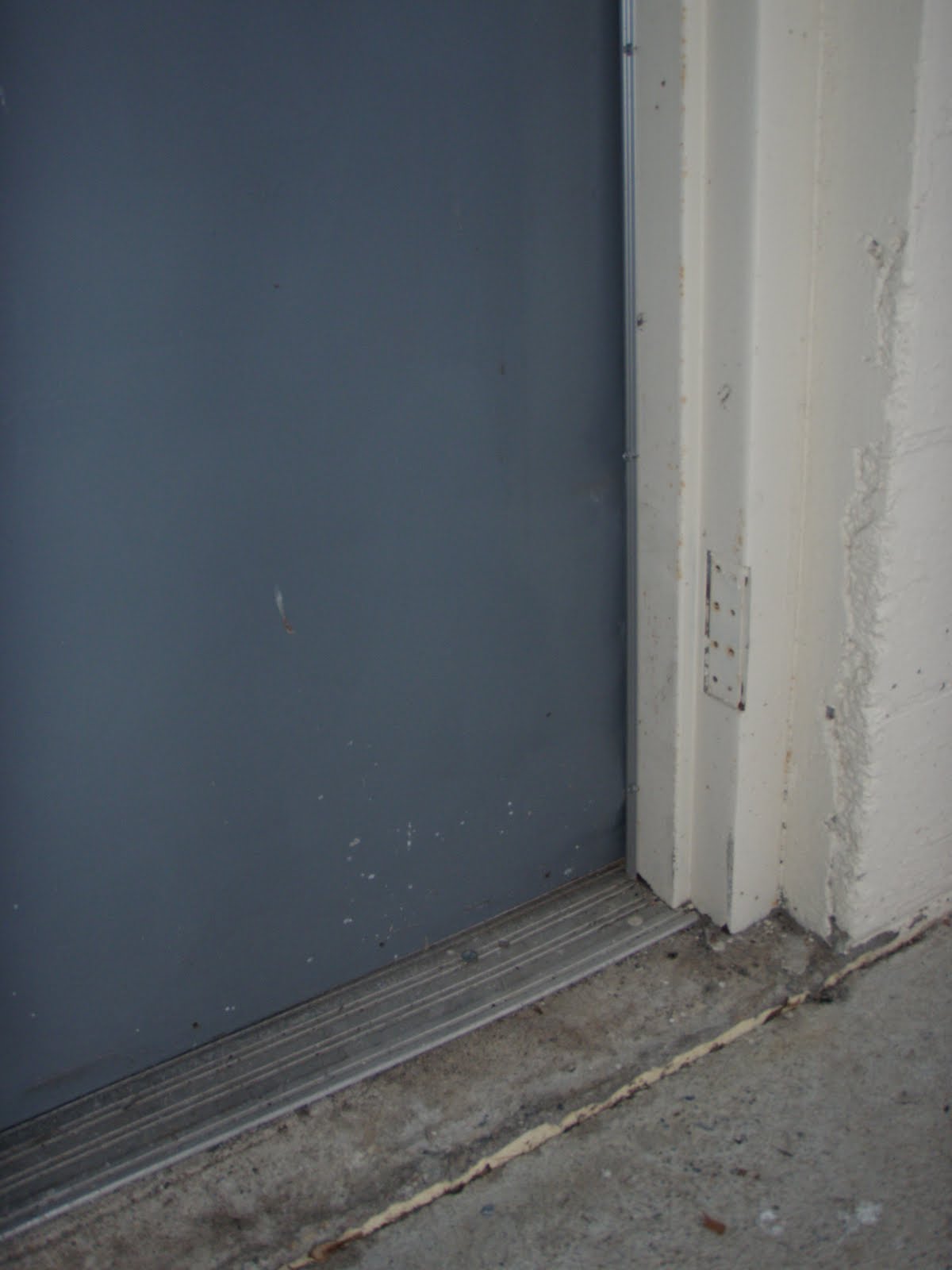
A Gnawing Issue

This time of year, even with 12 degree nights and snow on the ground, rodents can be active around structures. Usually, they will exploit and make larger existing openings. A favorite is the opening that may be in between two doors, at the sweep level of an astragal seal. This photo shows a small gap that let enough heat and odors out of it to encourage a rodent to start expanding the opening. You can see a leaf pictured in the gap between where the mouse has chewed it apart. The solution here is to remove these damaged vinyl sweeps and replace them with new, brush style sweeps.
-Lauren Greenhow, General Manager, GreenHow, Inc.
GreenHow.com. Effective Organic & Low Impact Solutions, Lawn Care, Pest Control & Termite Control in Newton and Metro Boston.
Thursday, February 3, 2011
Going down the drain.
 Clean drains will reduce fly activity. You can clearly see the pens, forks and straws in the bottom coated with organic matter. What is not visible, but present, are the fly larvae and pupa casings in the moist, organic matter. Using high quality Brushtech
to clean the drain and maintain the drain, the fly breeding source in this drain is eliminated. Fly management is integrated pest management by managing breeding sources, typically wet organic matter, without the use of pesticides.
-Lauren Greenhow, General Manager, GreenHow, Inc.
GreenHow.com. Effective Organic & Low Impact Solutions, Lawn Care, Pest Control & Termite Control in Newton and Metro Boston.
Sunday, March 21, 2010
Spring Time Emergence
As the weather warms up, you may start to see a return visit from those fall occasional invaders. These include "stink bugs" or western conifer seed bugs, and lady bugs, or the ladybird beetle. These insects do not infest a structure, they simply overwinter inside, emerging, sometimes on the wrong side, when the weather is warms up. Traditional integrated pest management (IPM) practices like tight screening and caulking exterior openings will reduce the amount of overwintering occasional invaders. If they are inside, simply vacuum them up, no pesticide application is necessary.
-Lauren Greenhow, General Manager, GreenHow, Inc.
www.GreenHow.com. Effective Organic & Low Impact Solutions, Lawn Care, Pest Control & Termite Control in Newton and Metro Boston.
-Lauren Greenhow, General Manager, GreenHow, Inc.
www.GreenHow.com. Effective Organic & Low Impact Solutions, Lawn Care, Pest Control & Termite Control in Newton and Metro Boston.
Saturday, February 27, 2010
Bugs and Beetles, In February
We have had some occasional warm days, that have led to the appearance inside of bugs and beetles that are more often associated with outside activity. For example, when temperatures got a little higher than 40 degrees F, western conifer seed bugs and asian ladybird beetles (the official bug of Massachusetts), both of which will overwinter in attics, came down into living spaces. The combination of heat and light for those overwintering in certain areas, triggered the movement toward what the insects thought was the outside, leading to emergence in a living space. For those outside insects, ending up in a living space provides no resources to enable reproduction, so simply vacuum up (a favored Integrated Pest Management (IPM) technique) the ones you see, they will not infest your structure.
-Lauren Greenhow, General Manager, GreenHow, Inc.
www.GreenHow.com. Effective Organic & Low Impact Solutions, Lawn Care, Pest Control & Termite Control in Newton and Metro Boston.
-Lauren Greenhow, General Manager, GreenHow, Inc.
www.GreenHow.com. Effective Organic & Low Impact Solutions, Lawn Care, Pest Control & Termite Control in Newton and Metro Boston.
Sunday, February 14, 2010
Site Sanitation
Pest control is sanitation. Effective pest control, whether structural pest control, or ornamentals and shrubs is based on site sanitation. Keeping debris properly disposed of will dramatically reduce and control pest populations. For exterior pest control, including reducing issues that affect plant health, clean up all limbs, leaves and debris. Site sanitation will reduce the chance of plant disease. In addition, debris that are cleaned up reduce harborages for other pests, both rodents and insects that if left unchecked may multiply and cause problems inside.
-Lauren Greenhow, General Manager, GreenHow, Inc.
www.GreenHow.com. Effective Organic & Low Impact Solutions, Lawn Care, Pest Control & Termite Control in Newton and Metro Boston.
-Lauren Greenhow, General Manager, GreenHow, Inc.
www.GreenHow.com. Effective Organic & Low Impact Solutions, Lawn Care, Pest Control & Termite Control in Newton and Metro Boston.
Saturday, January 30, 2010
Little Black Ants
This time of year, customers start to report sightings of little black ants inside their homes. The foraging ants are very small, and follow edges foraging for sweet and greasy food sources. Try to use baits that the ants will consume leading to colony elimination. Treating foraging trails is rarely successful. A good IPM technique is to clean up foraging trails by wiping trails with a light vinegar cleaning solution or plain warm water.
-Lauren Greenhow, General Manager, GreenHow, Inc.
http://www.greenhow.com/. Effective Organic & Low Impact Solutions, Lawn Care, Pest Control & Termite Control in Newton and Metro Boston.
-Lauren Greenhow, General Manager, GreenHow, Inc.
http://www.greenhow.com/. Effective Organic & Low Impact Solutions, Lawn Care, Pest Control & Termite Control in Newton and Metro Boston.
Tuesday, December 29, 2009
The Importance of Sanitation
For control of many structural pests, and turf and ornamental pests and diseases, site sanitation is critical to success. Integrated pest management (IPM) depends on non chemical solutions to alleviate pest issues. One of the most important is site sanitation. For interior sanitation, this time of year can provide a great opportunity for homes and businesses to clear out the cobwebs and improve the level of sanitation. Sanitation usually means implementing proper disposal of waste, but should be expanded to include reduction of clutter, here is a list of ideas on sanitation from the EPA website. An unorganized area, that is inaccessible to you, probably would be a great harborage for insects and rodents. Stored items should be off the ground and away from walls (12 inches is ideal) if possible.
-Lauren Greenhow, General Manager, GreenHow, Inc.
www.GreenHow.com Effective Organic & Low Impact Solutions, Lawn Care, Pest Control & Termite Control in Newton and Metro Boston.
-Lauren Greenhow, General Manager, GreenHow, Inc.
www.GreenHow.com Effective Organic & Low Impact Solutions, Lawn Care, Pest Control & Termite Control in Newton and Metro Boston.
Thursday, December 17, 2009
Pantry Pests
It's great to have the holidays here, and guests and parties on these cold winter nights. As you pull out long unused baking sheets or flower, pay attention to signs of pantry pests. These signs include webbing in the rice or flour container, evidence of small silky cocoons in the corners of cabinets, or adult moths. These insects have complete metamorphosis, meaning the eggs are laid on or near the infested product, hatch to become a larval stage (worm-like) that feeds on the flour, rice, cereal, or other product, then climbs to a high point to pupate into an adult reproductive moth. Freeze infested products like bird food or pet food if you don't want to discard them, otherwise discard infested products and clean out cabinets of pupal casings.
-Lauren Greenhow, General Manager, GreenHow, Inc.
www.GreenHow.com. Effective Organic & Low Impact Solutions, Lawn Care, Pest Control & Termite Control in Newton and Metro Boston
-Lauren Greenhow, General Manager, GreenHow, Inc.
www.GreenHow.com. Effective Organic & Low Impact Solutions, Lawn Care, Pest Control & Termite Control in Newton and Metro Boston
Monday, November 23, 2009
Brush Weatherseals and Pest Exclusion

This is the time of year that we notice an increase in rodent calls. Sealing openings to the exterior is the first solution step in integrated pest management for rodent control. Homes and business usually have numerous small openings around plumbing and electrical penetrations, or where foundation and sill changes occur. The largest openings most homes have are around and under the exterior doors and garage doors. Many options exist to seal them, the most effective is brush weatherseal. We install brush weatherseal door sweeps to keep rodents from entering below a door. We also use brush weatherseals around doors and garage doors, and if necessary, replace the base compression seals below the garage doors. Installing a sweep is a simple operation, measure, select the appropriate brush weatherseal, cut and install. Brush weatherseal is superior to vinyl because it forms a seal up to 3 times tighter and lasts much longer. These photos show a door before and after having brush weatherseals and brush door sweeps installed. For do it yourself customers, consider the Sealeze brand brush weatherseal for superior performance.
-Lauren Greenhow, General Manager, GreenHow, Inc.
www.GreenHow.com. Effective Organic & Low Impact Solutions, Lawn Care, Pest Control & Termite Control in Newton and Metro Boston.
Saturday, October 31, 2009
Spiders!

These spider webs were spotted this past week as signs of a spider infestation taking over greater Boston. It appears these webs are thick and can capture ghosts, skeletons, eyeballs and other strange objects. As with any spider infestation, management is achieved by removing the spider and its web with either a broom or a vacuum. A thorough vacuuming of the infested area to remove any other spiders and eggs will yield the best results.
-Lauren Greenhow, General Manager, GreenHow, Inc.
www.GreenHow.com. Effective Organic & Low Impact Solutions, Lawn Care, Pest Control & Termite Control in Newton and Metro Boston.
Tuesday, October 27, 2009
Occasional Invaders: Western Conifer Seed Bug (Stinkbug)
The cool weather brings the occasional invaders to our homes and businesses looking for overwintering sites. Besides the Asian Ladybird beetle, another fall pest to arrive on the side of our structures is the Western Conifer Seed Bug. This bug only uses structures for overwintering sites. A complete exclusion service from an integrated pest management professional is the key to keeping this bug from becoming a nuisance. The next time they are spotted at a home or business is late February or early March when they come out from overwintering sites in walls or attics.
-Lauren Greenhow, General Manager, GreenHow, Inc.
www.GreenHow.com. Effective Organic & Low Impact Solutions, Lawn Care, Pest Control & Termite Control in Newton and Metro Boston.
-Lauren Greenhow, General Manager, GreenHow, Inc.
www.GreenHow.com. Effective Organic & Low Impact Solutions, Lawn Care, Pest Control & Termite Control in Newton and Metro Boston.
Wednesday, October 21, 2009
Yesterday's sunny warm fall weather led to large congregations of ladybugs, order Coleoptera, family Coccinellidae (and the official bug of Massachusetts), on businessess and homes in eastern Massachusetts. This activity is likely to continue over the next few weeks continuing to drive calls to pest control companies and news stories like this one on WCVB-TV yesterday. They will enter wall voids or attics to hibernate over the winter. They feed on plant feeding insects such as scale insects, aphids, and others. They are a beneficial insect that is only an annoyance inside with no damage to either a structure or contents. They will congregate together, so if control is needed, some specific sites in the attics where they are located can be treated. The appropriate integrated pest management (and green pest control) technique for lady bugs in office or living spaces is to remove them with a vacuum, there is no need to spray them with an insecticide.
-Lauren Greenhow, General Manager, GreenHow, Inc.
www.GreenHow.com. Effective Organic & Low Impact Solutions, Lawn Care, Pest Control & Termite Control in Newton and Metro Boston.
-Lauren Greenhow, General Manager, GreenHow, Inc.
www.GreenHow.com. Effective Organic & Low Impact Solutions, Lawn Care, Pest Control & Termite Control in Newton and Metro Boston.
Wednesday, October 7, 2009
Keeping your eye out for hemlock woolly adelgid
As you clean out your garden this fall, inspect your hemlocks for signs of Hemlock Woolly Adelgid, an insect that causes severe damage to hemlocks. Signs of infestation include woolly masses around the base of the needles. These obvious indicators are combined with a loss of needle foliage in the hemlock.
-Lauren Greenhow, General Manager, GreenHow, Inc.
www.GreenHow.com. Effective Organic & Low Impact Solutions, Lawn Care, Pest Control & Termite Control in Newton and Metro Boston.
-Lauren Greenhow, General Manager, GreenHow, Inc.
www.GreenHow.com. Effective Organic & Low Impact Solutions, Lawn Care, Pest Control & Termite Control in Newton and Metro Boston.
Wednesday, August 26, 2009
Spiders
In late summer spider populations can become noticeable and may aggravate some people with their presence in and around structures. Integrated pest management is critical to spider control. After identifying the type of spider causing the problem through an inspection, steps should be taken to prevent spiders from entering. That includes sealing entry holes, caulking around windows and doors and screening windows. In addition, switching the lighting to "bug" lights (yellow bulbs) or on commercial buildings using sodium vapor instead of mercury vapor lamps. Reducing and eliminating clutter, such as stored items, books, boxes, lumber, will reduce spiders. Outside, keep turf and lawn areas mowed, and keep vegetation off the structure. Inside, utilize a dehumidifier in humid areas, such as basements. Most important, remove spider webs and egg sacs with either a vacuum or a brush.
-Lauren Greenhow, General Manager, GreenHow, Inc.
www.GreenHow.com. Effective Organic & Low Impact Solutions, Lawn Care, Pest Control & Termite Control in Newton and Metro Boston.
-Lauren Greenhow, General Manager, GreenHow, Inc.
www.GreenHow.com. Effective Organic & Low Impact Solutions, Lawn Care, Pest Control & Termite Control in Newton and Metro Boston.
Tuesday, August 18, 2009
Green News
Recently Sean was interviewed by the Lowell Sun as part of the Green Column written by Hiroko Sato. You can link directly to the column in the Lowell Sun here. It discusses integrated pest management, the employment of cultural, mechanical, physical as well as chemical strategies to manage pest populations.
-Lauren Greenhow, General Manager, GreenHow, Inc.
www.GreenHow.com. Effective Organic & Low Impact Solutions, Lawn Care, Pest Control & Termite Control in Newton and Metro Boston.
-Lauren Greenhow, General Manager, GreenHow, Inc.
www.GreenHow.com. Effective Organic & Low Impact Solutions, Lawn Care, Pest Control & Termite Control in Newton and Metro Boston.
Tuesday, July 21, 2009
Keep vegetation off structures.
Pruning back vegetation from structures is usually done in midsummer to minimize access trails for insects, such as ants and carpenter ants. This practice of physically removing access for insects to the structure is an important component of integrated pest management. Foundation plants need to be kept off a home or business through regular pruning. Try to keep vegetatation 18 to 24 inches from the structure to allow air movement and prevent pest issues.
-Lauren Greenhow, General Manager, GreenHow, Inc.
www.GreenHow.com. Effective Organic & Low Impact Solutions, Lawn Care, Pest Control & Termite Control in Newton and Metro Boston.
-Lauren Greenhow, General Manager, GreenHow, Inc.
www.GreenHow.com. Effective Organic & Low Impact Solutions, Lawn Care, Pest Control & Termite Control in Newton and Metro Boston.
Friday, July 3, 2009
Mosquitos
Biting flies and mosquitoes are coming out. Mosquitoes can breed in moisture as small as a soda or water bottle cap, so vigilantly inspect your yard for breeding sources, swings, kiddie pools, tires and toys that collect water. For mosquitoes an integrated pest management program is critical. Focus on reducing breeding habitat (water) by eliminating standing water, keeping gutters clean and using repellents if outside at dusk and screens on windows. Mosquito dunks, or larvacides, such as the small donut shaped bacillus thuringiensis dunks are available at hardware stores and are widely used around homes in standing water, like rain barrels. They have no effect on other organisms, except they kill all stages of pupating mosquitoes, not just the final pupation like growth regulators do.
-Lauren Greenhow, General Manager, GreenHow, Inc.
www.GreenHow.com. Effective Organic & Low Impact Solutions, Lawn Care, Pest Control & Termite Control in Newton and Metro Boston
-Lauren Greenhow, General Manager, GreenHow, Inc.
www.GreenHow.com. Effective Organic & Low Impact Solutions, Lawn Care, Pest Control & Termite Control in Newton and Metro Boston
Friday, June 26, 2009
Mud Daubers
The mud dauber is a solitary wasp that builds tubes or tunnels of mud in which to lay eggs. These mud tubes or tunnels may be located anywhere on a structure, but are usually either on the foundation or inside the attic, or at the soffit. Generally stone, cement and unpainted wood are preferred surfaces to build on, instead of painted wood. Mud daubers do not sting, and can be recognized by an all black or black with yellow or white legs. A key to differentiate from a flying ant, with whom they are often confused, is the long pedicel (piece between the thorax and abdomen) and curved antennae. Non chemical integrated pest control methods can be safely employed, including removing the mud tubes and screening attic openings.
-Lauren Greenhow, General Manager, GreenHow, Inc.
www.GreenHow.com. Effective Organic & Low Impact Solutions, Lawn Care, Pest Control & Termite Control in Newton and Metro Boston.
-Lauren Greenhow, General Manager, GreenHow, Inc.
www.GreenHow.com. Effective Organic & Low Impact Solutions, Lawn Care, Pest Control & Termite Control in Newton and Metro Boston.
Wednesday, June 24, 2009
Octopamine Blocker?
Octopamine is a neurotransmitter that is found in insects and crustaceans. The botanical oil products we use for pest control act by focusing on and interrupting the octopamine neurotransmitter receptors in insects. This leads to a breakdown in the insects central nervous system. These botanical oils are beneficial to our service because when used properly they provide control, and since mammals, birds and fish do not have receptors for octopamine, botanical oils do not effect them adversely.
-Lauren Greenhow, General Manager, GreenHow, Inc.
www.GreenHow.com. Effective Organic & Low Impact Solutions, Lawn Care, Pest Control & Termite Control in Newton and Metro Boston.
-Lauren Greenhow, General Manager, GreenHow, Inc.
www.GreenHow.com. Effective Organic & Low Impact Solutions, Lawn Care, Pest Control & Termite Control in Newton and Metro Boston.
Subscribe to:
Posts (Atom)


 Posts
Posts

